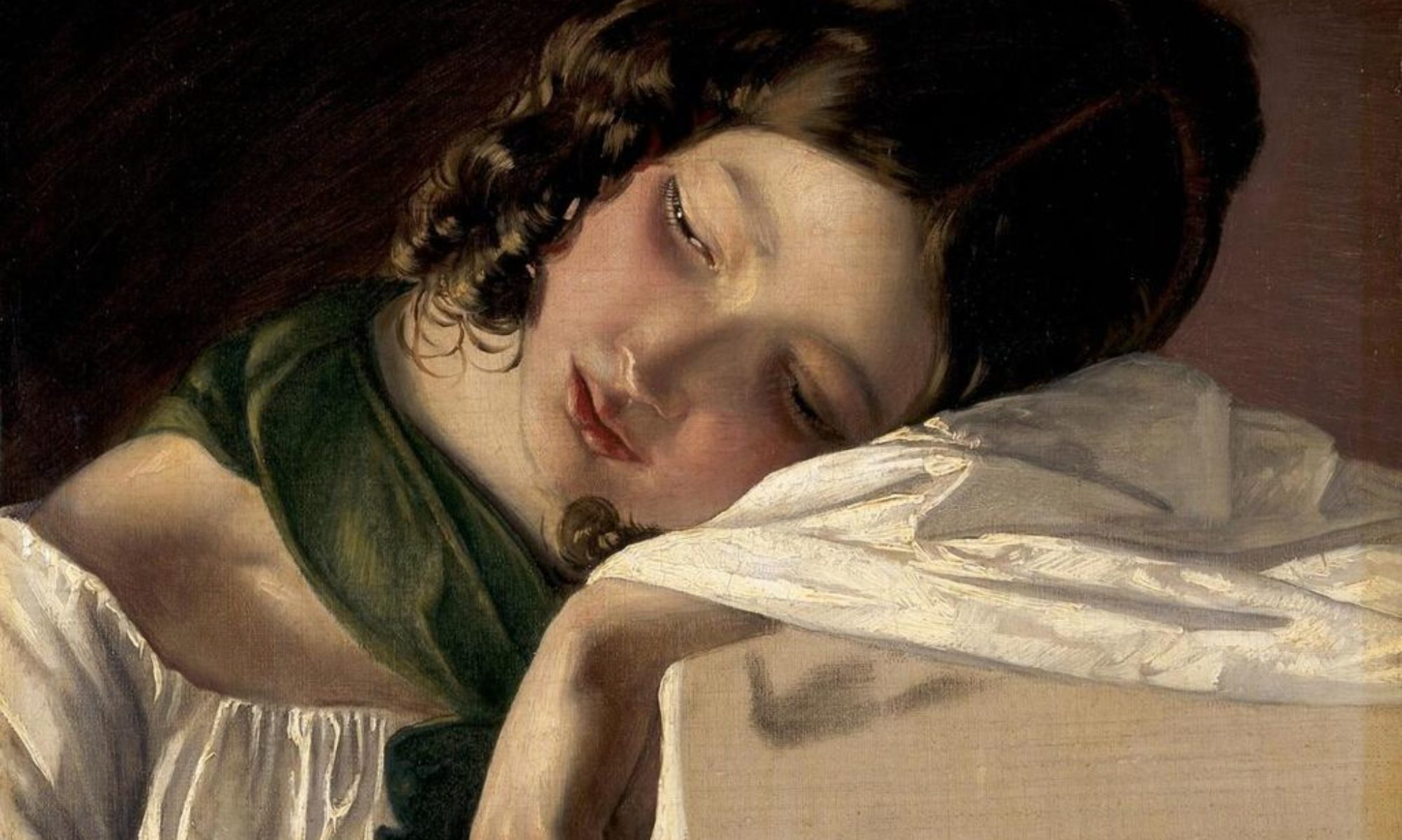
Baking With Emily Dickinson

Emily Dickinson

As I waited on an email this afternoon, I was “thumbing” through digital copies of The Boston Cooking School Magazine of Culinary Science and Domestic Economics when I came across this interesting article in a 1906 edition. I’ve excerpted the sections with the recipes. Enjoy!

Emily Dickinson as Cook and Poetress

by Helen Knight Wyman

If I can stop one heart from breaking,
I shall not live in vain;
If I can ease one life the aching,
Or cool one pain,
Or help one fainting robin
Unto his nest again,
I shall not live in vain.

So sang the Amherst recluse and poetess. We think of her as all soul and voice; but, as Mr. Higginson relates, at their first personal interview she said to him that “she made all their bread because her father liked only hers; then saying shyly, ‘And people must have pudding!’ — this very timidly and suggestively, as if they were meteors or comets.”

In a favorite cookery-book belonging to my mother (an own aunt of Emily Dickinson) are many leaves added to the quaint pages of the original book, published in 1831. On these were copied, or pinned in, recipes given by relatives and friends, and proved and tried and found good.

Among these are two from Amherst that I trust will prove interesting to readers of this magazine, proving that she was not altogether

A creature all too bright and good
For human nature’s daily food!

The following is for a corn-cake, being copied by my youngest aunt, but signed “Emily Dickinson.” It is followed by another, given by a New York aunt, and the words are added, “Both are delicious.”

On another page is a recipe for rice-cake as follows. Rice-cake was considered our very best “company cake” in my childhood, being carefully placed in a large tin pail, and only used when outside persons came to tea. The rule was much richer than this, however, and it was baked in sheets, very thin, and cut into squares after coming from the oven. Mace (or nutmeg) was the spice always used in it.

Emily Dickinson’s Corn-Cake

Wheat flour, two tablespoonfuls.
Brown sugar, two tablespoonfuls.
Cream (or melted butter), four tablespoonfuls.
Salt.
Eggs, one.
Milk, one-half pint.
Indian meal, to make a thick batter.

Emily Dickinson’s Rice-Cake (*Gluten-free)

One cup of ground rice.
One cup of powdered sugar.
Two eggs.
One-half a cup of butter.
One spoonful of milk with a very little soda
Flavor to suit.

Cousin Emily.

Susanna’s note: For additional info, check out Emily Dickinson and Cooking, which includes a recipe for her gingerbread!

Mrs. Beeton’s Victorian Menus for Picnics, Balls, and Wedding Breakfasts

While searching for information on afternoon teas, I stumbled across Mrs. Beeton’s picnic menu for forty. When I originally posted this article, I stated that Beeton’s book was published in 1866 as listed on Google Books. Upon closer examination, I realized that no date was listed on the actual text. I searched on the famous author’s bibliography and quickly learned that Isabella Beeton had died in 1865. I knew she had led a short life, but I never knew the actual dates of her birth and death. This book may have been published after her passing. This is an interesting tidbit about Mrs. Beeton on the PBS site “The Secret Life of Isabella Beeton.

“Isabella died at the age of 28 after giving birth to her fourth child in January of 1865. Her death is officially attributed to puerperal fever, an acute type of septicemia usually caused by an unsanitary environment. She was buried at West Norwood Cemetery in the London borough of Lambeth.

Samuel Beeton and subsequent publishers kept the news of Isabella’s death quiet, and continued to publish updates to Household Management, as well as completely new books, under her name.”

Isabella Beeton

Bill of Fare for a Picnic for 40 Persons.

A joint of cold roast beef, a joint of cold boiled beef, 2 ribs of lamb, 2 shoulders of lamb, 4 roast fowls, 2 roast ducks, 1 ham, 1 tongue, 2 veal-and-ham pies, 2 pigeon pies, 6 medium-sized lobsters, 1 piece of collared calf‘s head, 18 lettuces, 6 baskets of salad, 6 cucumbers.

Stewed fruit well sweetened, and put into glass bottles well corked; 3 or 4 dozen plain pastry biscuits to eat with the stewed fruit, 2 dozen fruit turnovers, 4 dozen cheesecakes, 2 cold cabinet puddings in moulds, 2 blancmanges in moulds, a few jam puffs, 1 large cold plum-pudding (this must be good), a few baskets of fresh fruit, 3 dozen plain biscuits, a piece of cheese, 6 lbs. of butter (this, of course, includes the butter for tea), 4 quartern loaves of household bread, 3 dozen rolls, 6 loaves of tin bread (for tea), 2 plain plum cakes, 2 pound cakes, 2 sponge cakes, a tin of mixed biscuits, 1/2 lb. of tea. Coffee is not suitable for a picnic, being difficult to make.

Things not to be forgotten at a Picnic.

A stick of horseradish, a bottle of mint-sauce well corked, a bottle of salad dressing, a bottle of vinegar, made mustard, pepper, salt, good oil, and pounded sugar. If it can be managed, take a little ice. It is scarcely necessary to say that plates, tumblers, wine-glasses, knives, forks, and spoons, must not be forgotten ; as also teacups and saucers, 3 or 4 teapots, some lump sugar, and milk, if this last-named article cannot be obtained in the neighbourhood. Take 3 corkscrews.

Beverages.—3 dozen quart bottles of ale, packed in hampers; gingerbeer, soda-water, and lemonade, of each 2 dozen bottles; 6 bottles of sherry, 6 bottles of claret, champagne a discretion, and any other light wine that may be preferred, and 2 bottles of brandy. Water can usually be obtained  so it is useless to take it.


IB_ballmenu
IB_ballmenu_summer